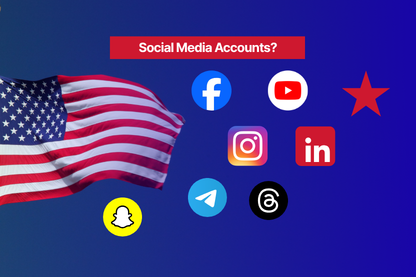
When applying for a USA B1/B2 tourist or business visa, many applicants wonder whether the US Consulate checks their social media accounts. In recent years, social media screening has become an important part of the visa review process. Applicants are often concerned about what happens if they do not use social media or if they have liked, shared, or posted controversial content online.
In this blog, we explain how social media affects a USA visa application and what applicants should be careful about.
Yes, during the USA visa application process, applicants may be asked to provide details of their social media accounts used in recent years. This information is generally collected through the DS-160 visa application form.
The US authorities may review publicly available online activity to:
Applicants may be asked to mention usernames/handles from platforms such as:
Usually, only usernames are requested — passwords are not required.
If a person genuinely does not use social media, it is generally not a problem. Many applicants do not actively use social networking platforms.
However:
Potentially, yes. Public online activity may be reviewed if it raises concerns related to:
Even liking, sharing, or commenting on inappropriate content may sometimes attract attention during background checks.
Applicants should avoid posting or engaging with:
Maintaining a respectful and professional online presence is always advisable.
Always provide accurate social media information if requested.
Avoid controversial or offensive public content.
Check old public posts, comments, likes, and shares.
Your online profile should match your visa application details.
Do not create fake profiles or hide important details.
Social media screening is now a part of the USA visa process for many applicants. While having no social media account is usually not an issue, applicants should always be truthful and maintain responsible online behavior. Respectful and genuine online activity can help avoid unnecessary complications during visa review.
A well-prepared visa application, honest information, and professional conduct — both offline and online — are always the best approach for USA B1/B2 visa applicants.

Stay updated with our latest offers and travel updates—delivered straight to your inbox.